A Milky Way Out
Inès Kivimäki

Inès Kivimäki (b. 1990, France) is a Finnish-Algerian artist currently based in Los Angeles, USA. Kivimäki’s practice expands research on both emerging and historical technologies through multi-media projects often revolving reflections of technological dependency and its implications on self-image.
The artist’s recent solo and group exhibitions include Tonus (Paris), Fulcrum (LA), Phase Gallery (LA), Roberts & Tilton (LA), Human Resources (LA), Gallery 2A (LA), Hutto-Patterson Exhibition Hall (LA), Art Center DTLA, and Arkadia (Helsinki). She holds an MFA in Visual Art from UC Riverside and currently co-runs the project space Timeshare in Lincoln Heights, Los Angeles.
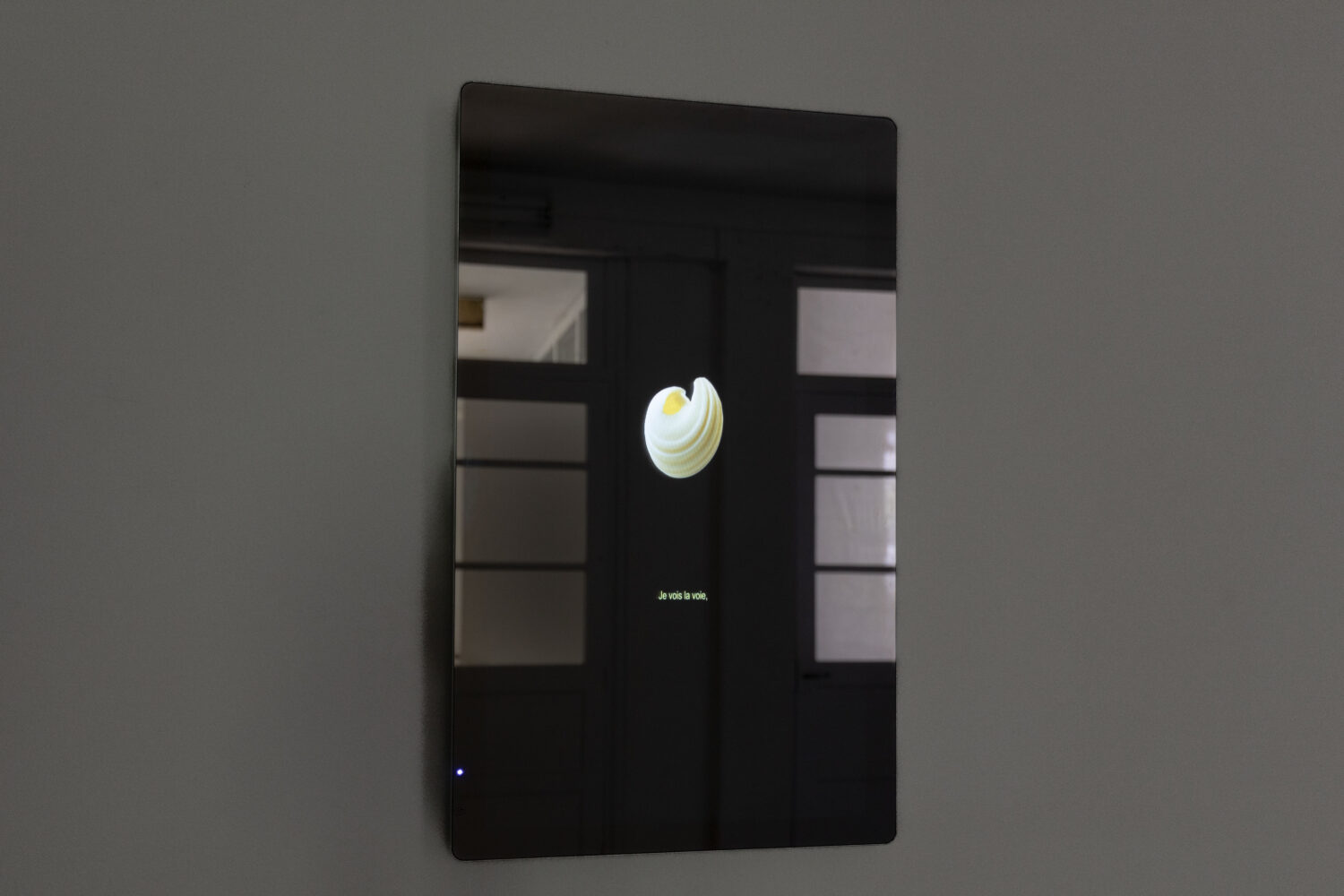
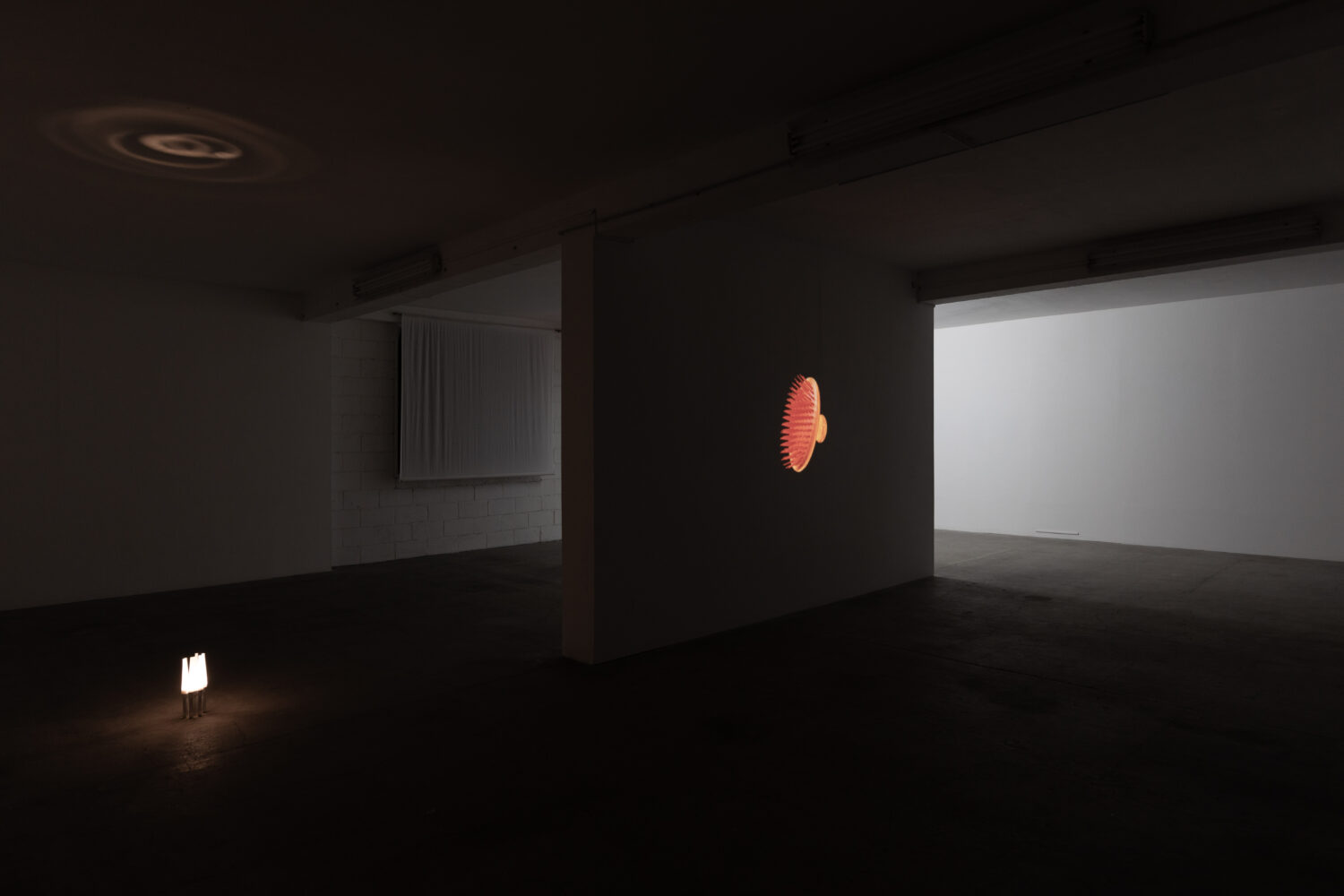
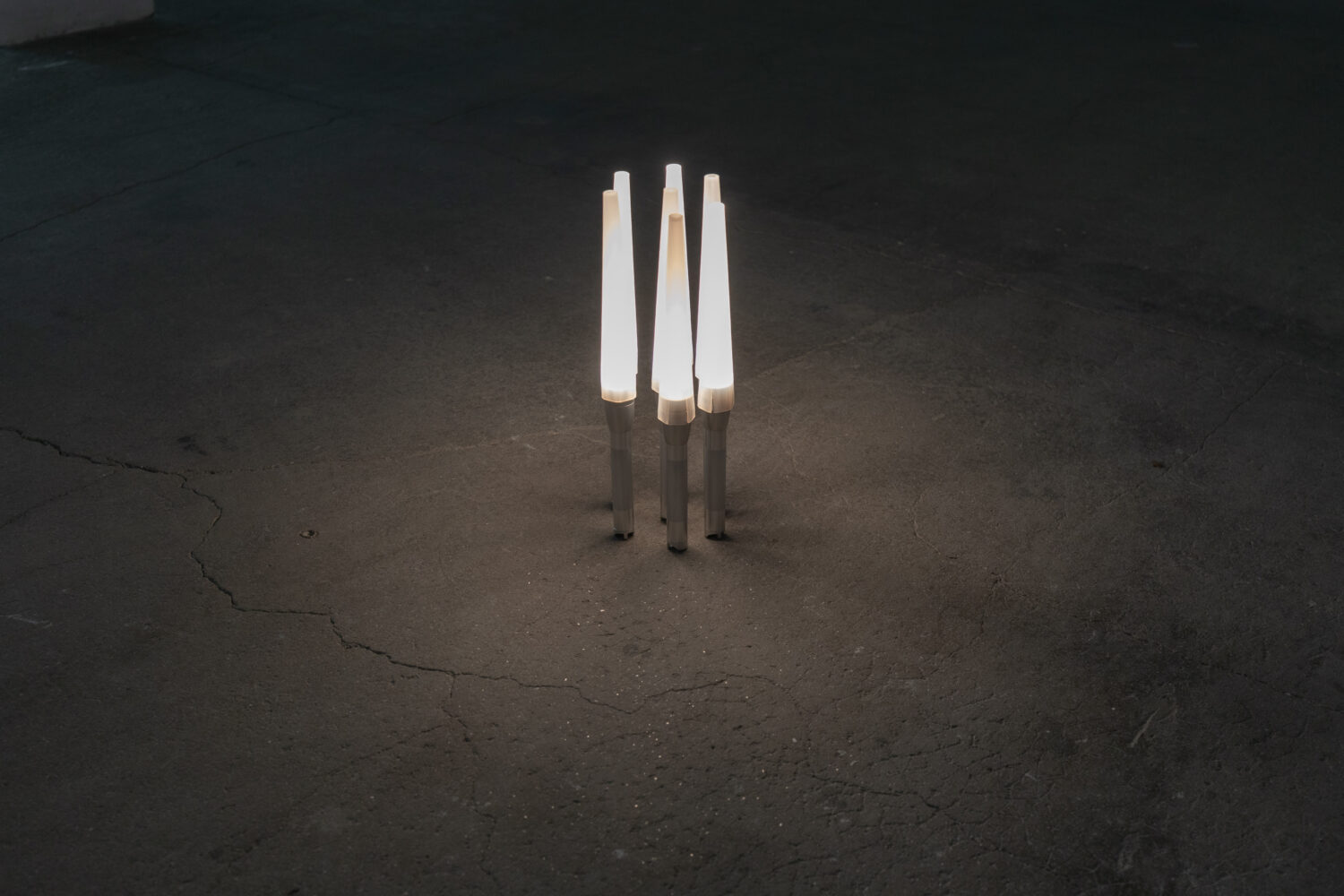
Like the fantastical systems that link to forms to names, paths and their ends are bound by a kind of make-belief, linked by likenesses, sympathies, and co-occurrences, that drift and flicker and diverge with use. It is a kind of utility then, but also time that changes (or, acts strangely) at the limit. From distant stars flickering strangely in the sky, to flashlights that suddenly begin to flutter in the dark, both mythological and technological lights, whence unsteadied, have been understood as warnings, signals announcing the arrival of apparitions, spirits and ghosts, ill-fates and omens. Still, signs that flicker can also hail a kind of certainty, a steady rhythm, that promises to guide those who dare follow. The danger to rhythm’s enigma, as Maurice Blanchot once warned, is also this certainty: the inevitability of the error, of the lostness and alienation that not only defines, but creates the route.
Similarities appear between algorithmic languages and magical thinking. Both can be seen as constantly unraveling garlands, daisy-chains, of relations, endlessly bifurcating, forming paths that derail, winding up thoughts that can only unwind. Those who choose to enter these fields—spheres, circles, loops, networks—are always inevitably faced with a choice. The path is chosen and followed to its un-end: an absurdity or nonsense of sorts, but one which nevertheless forces a logic to reveal. En route, words and meanings unfold and break open, perhaps per the etymology of the word ‘route’—from the Latin, rupta: a ‘broken way.’ What breaks open is a map of misreading, spiral trails of lyric drift, leading, ultimately, to linguistic change.
The pilgrimage plots a similar narrative, following lines—of thought, desire, language—to an indefinite end. It helps to consider such spiritual treks as early forms of roadside attractions, analogue techno-utopian routes devised to circulate goods and currency. History reminds that some monks, in the late medieval period, would intentionally alter maps, shifting set paths to send pilgrims off-course in search of offerings. The Camino de Santiago, St. James’ route, for example, follows an even earlier Roman trade route, which leads its trekkers to the Cap Finisterre—literally, from the Latin, ‘the end of the world.’ This end, as we now know, is not where the world drops off. And yet, this edge persists as a reminder—a sign or signal left from a bygone era—of the limits of one sphere of knowledge, marked by a geographic boundary. The limits of my language, as Wittgenstein once wrote, mean the limits of my world. Disneyland, a distant cousin to the pilgrim’s route, would later develop this concept as a visual device in world-building, the ‘berm’: the enclosure that contains the fantasy, permits the system.